Wednesday, March 7, 2018

10 Tips on How to Survive Tax Season


This blog post I wrote for my client SelectQuote gave me some ideas on how to get the annual job done with a bit less pain. I hope you find a tip or two you can use as well. My best tip for March 7: Start now and avoid the last minute stress of Tax Day. 
As April 17 approaches one thing is certain – it's that taxing time of year again. It's normal to feel some angst as you plunge into calculating your taxes. Or maybe you don't plunge – you procrastinate. After all, it's stressful to even think about it. 
You still have to do the work, but the annual task we all face is a little easier to manage when you avoid common filing mistakes. When you do it right, you’ll get your refund faster or you’ll avoid having to pay a penalty because you’re late paying your taxes. 
Take a deep breath and follow advice from the IRS and other tax experts on how to escape common pitfalls: 

File Electronically

It’s time to update your filing method if you’re still mailing your return. The e-file system scans for common errors and sends the form back to you for correction. If your form is error-free, you may still have an electronic advantage – you’ll get your refund faster.

Correct Filing Status


This may not be self-evident, as the IRS has five options: single, married filing jointly, married filing separately, head of household or qualifying widow(er) with dependent child. You can choose only one. If you qualify for more than one status, file with the one that has the lowest tax rates. The IRS will help you figure it out with this 
tutorial. Yes, the IRS can be helpful.

Check Your MathOne advantage of using tax preparation software is that it performs your calculations. But you still need to enter the numbers correctly to begin with, whether you’re going solo or using software. So go slowly and double check each entry. It’s easy to transpose figures or to fat finger an entry. If the IRS finds a math discrepancy, they’ll let you know, but they’ll also correct your error and recalculate your taxes. You don’t want to trust the IRS on that, so be sure your math is correct.

Sign and Date Your Forms


As easy as it seems, many taxpayers forget to sign and date, in their rush to meet the filing deadline. An unsigned tax return is an invalid return. If you’re filing jointly, be sure your spouse also signs and dates. If you file electronically, you need to enter your Personal Identification Number (PIN) to validate your form.  

Direct Deposit MisroutingYou can have your refund deposited into one or more bank accounts. Direct deposit is a great way to get your refund faster. The danger lies in having to enter yet more numbers on your tax form, increasing the chances of entering a wrong account or incorrect routing number. You could lose your refund entirely if it winds up in someone else’s account. The IRS has no procedure for replacing lost electronically transferred funds. So take extra care to enter your information correctly. Check with your bank if you’re not sure which numbers to use.

Misspelled or Different Names


Reporting names correctly is extremely important. When your name, your spouse’s name or the names of your children don’t exactly match the tax identification number that the Social Security Administration (SSA) has on file, you’ll face a delay. It’s especially 
important to report your name correctly if you changed your name in the past year due to marriage or divorce. Before you file, alert the SSA of your new name to be sure your tax return won’t trigger a problem.

Filing Late

The due date if you owe 2017 taxes is Tuesday, April 17, 2018. The IRS estimates that 20 percent of us wait until a week before the deadline to start work on our tax returns. If you’re due a refund, you don’t have to file by the deadline. If you owe money to the IRS and can’t file by April 17, the IRS will charge you interest. You can file for an extension if you run out of time. An extension guarantees your refund will come late; and if you owe taxes and don’t pay by the deadline, the IRS will charge you interest. So get on it early enough to file on time.

Tax Credits and Deductions


The IRS is not exactly known for generosity, but the number of tax credits and deductions available to you may be overwhelming. You subtract tax credits from the amount of taxes you owe. A popular one is the Child Tax Credit, which could save you $1,000. A nonrefundable credit means you get a refund only up to the amount you owe. A refundable tax credit means you get a refund, even if it’s more than what you think you owe. A deduction on the other hand, means you subtract that amount from your income before you figure the amount you owe. Confused? Check the IRS credits and deductions pagefor details. Still confused? Check with your tax professional for advice.

Select the Right Form


The 
IRS has three forms: 1040, 1040A and 1040EZ. You’ll never go wrong with the basic 1040, but the other options are shorter and perhaps easier (as in EZ). If your taxes are uncomplicated and you don’t want to itemize your deductions, you can save yourself some pain by using 1040A or 1040EZ. On the other hand, you may miss deductions by choosing a shorter form. Study the options and choose what’s right for you and your dependents.

Free Help!

The Volunteer Income Tax Assistance (VITA) program offers free help in preparing your taxes if you qualify. If you earn less than $54,000 a year or have disabilities, you may be eligible to get help from IRS-certified volunteers to file your taxes electronically. Find locations for this service and a checklist of what to bring when you meet with a volunteer.

The Light at the End of the Tunnel

As Tax Day 2018 draws near, be sure to check out freebies and discounts retailers offer to tax-paying Americans on or about April 17. You could score free or cheap cookies, ice cream, sandwiches, pizza, massages and spa treatments. Happy Tax Day! 

Tuesday, February 6, 2018

New tax law may mean more cash in your pocket

This blog post I wrote for my client SelectQuote details what the new tax law means to Americans. Will you see more take-home pay starting this month?

If you normally start thinking about taxes in early April, you may want to accelerate your thinking this year. The tax law approved by Congress in late December will change withholdings for about 90 percent of American employees, meaning more take-home pay. 

You should see a boost this month, if you haven’t already. Congress set Feb. 15 as the date for employers to comply with the guidelines. Before you start madcap spending, however, exercise a little caution.

The new tax withholding tables factor in your annual income, paycheck frequency, your tax-filing status, your tax bracket and the number of dependents you claim. These components determine the appropriate amount your employer withholds from your pay for federal income taxes. 

What’s the Bottom Line?

You can always check your first pay stub that reflects the changes and compare it to your previous take-home pay. Or, here’s a formula for determining how much your pay may change under the new law.
  • Find a recent pay stub and note how much was withheld from your pay for federal taxes.
  • Look at the Notice 1036 IRS form to find the new withholding amount for each deduction. The formula is based on your pay frequency (weekly, biweekly, monthly, etc.). Calculate your total withholding by multiplying the withholding amount times the number of dependents you claim.
  • Subtract this number from your current withholding amount per pay period. This is how much your paycheck could increase. 


What Else Is New?
  • The right amount: The new withholding tables may result in not enough money withheld from your pay to cover taxes owed, meaning you’ll need to write a check to the government when the April 15, 2019, tax deadline looms. That’s never fun. But the changes could result in too much withheld from your paycheck, meaning you’re shorting yourself on your take-home pay. If the government withholds too much, you’ll get a refund. But you’ll be giving Uncle Sam an interest-free loan, which may not be the best money management strategy. Your employer probably won’t advise you what to do, but you can use the IRS tax calculator to get a good estimate of the taxes you’ll owe. Then update your W-4 form on file with your employer to change your withholdings, if you see the need.
  • Tax calculator: The IRS is revising the tax withholding calculator on IRS.gov. This tool also should be available by the end of February. When it’s ready, you can use the new calculator to better determine your correct withholding.
  • The W-4 form: The form that employers use to determine your tax withholdings has not yet changed because of Congress’ rush to implement the new tax law. A new W-4 is expected to be ready by the end of February. 
  • Other changes for 2018: The only difference for now is that tax withholdings change, starting at least by mid-February, which most likely means more take-home pay. Other tax changes approved by Congress take effect in 2018, but you won’t need to make those calculations until tax time in 2019. So for the 2017 tax filing period with a deadline of April 15, 2018, it’s pretty much business as usual.
  •  Standard deductions: The new tax law changes standard deductions starting in 2018. For singles, the deduction nearly doubles to $12,000; and for married couples who file jointly, the standard deduction increases to $24,000. So you may not be eligible to itemize deductions in future years. 
  •  Child tax credit: The new tax bill doubles the credit from $1,000 to $2,000 for children under age 17 starting in 2018. If your children are 17 or older, or if you take care of elderly relatives, you can claim a $500 credit starting this year. 
  • Education tax breaks: If you have funds saved in a 529 college savings plan, you can use them for levels of education other than college starting this year. The money in this account can also cover private school tuition or tutoring for your child in grades K-12. 
  • Enjoy it while you can: Nearly all of the tax cuts for households expire after 2025, while the tax cuts for corporations are permanent.


What Should You Do Now?
  • Save it: Solid advice from tax experts is to save any extra take-home pay until you’re sure the government is withholding enough to cover your taxes, to avoid an unpleasant surprise at tax time in 2019. 
  • Do the math: Mark your calendar for a status check in June or July 2018 to estimate the amount of taxes you’ll owe for the entire year, using the IRS tax calculator. Then adjust your withholding, spending or saving accordingly. 
  • A final note: We’re not done yet. Watch for more tax law changes promised by Congress in 2019.


Monday, February 5, 2018

How to Teach Kids About Money


This blog post I wrote for my client SelectQuote highlights some fun lessons you can teach kids of any age about the value – and limitations – of money. 


A basic financial life skill is knowing how to live within your means – something that schools don't teach. The live-now-pay-later lifestyle is alluring, with credit card companies targeting adults of all ages, starting with college students. 

It’s all too easy for young adults to max out several cards and paying the minimum each month until they’re in so deep they have no choice but to file for bankruptcy. Perhaps if parents can teach their children, starting at a young age, how to successfully manage money, the danger of living beyond their means could be prevented.
Here are financial lessons you can teach your children to help them form sound money management skills they can carry into adulthood:
Preschool, Ages 3 to 5: Sometimes You Have to Wait
Desires of preschool kids are often easily granted and parents don’t think twice about grabbing that coveted toy as they wheel their carts and kids around the discount store. The lesson the child may be learning, however, is that you can always get what you want – no problem.
Try this, instead, to teach them the value of learning to save for what they want: Create three jars, each labeled Saving, Spending or Sharing. Each time the child gets money – as a gift, from doing chores or from a weekly allowance – help them divide the money equally among the jars.
The spending jar is for small purchases like stickers, an inexpensive book or a small toy. The sharing jar is for teaching the reward of donating to a worthy cause, like a favorite charity, or to a friend in need. The saving jar is for purchases that cost more and that are worth saving toward, like an electronic toy.
Each time the child adds money, count how much is in the jars and talk about how close they are to reaching a savings goal. This easy routine helps teach the value of patience, the reward of reaching a financial goal and the joy of sharing. Great lessons to learn at this young age.
Grade School, Ages 6 to 10: Understanding Spending Limits
Kids this age are closely tuned into their parents’ spending habits. Maybe your family is prone to splurging on luxuries like a big vacation every summer or buying a new car every couple of years while you go into deep debt. It is a highly visible lesson to kids this age that living large is more important than being financially responsible.
It’s far better to level with kids than to give them the signal that they’re entitled to the very best of everything that money can buy. Even when the desired purchase has an attainable price tag, if it doesn’t fit into your budget, tell your child they have to save for it or give up another item on their wish list.
Pre-teen, Ages 11 to 13: The Pleasure of Earning
At this age, kids can take on more responsibility around the house. Chores such mowing the lawn, vacuuming, taking out the trash, doing their own laundry, loading and emptying the dishwasher, washing the car are a great way to get kids to help around the house. Rather than giving them a set allowance just because they’re a member of your family, give commissions based on chores they accomplish. Negotiate reasonable rates for various tasks, have them keep business-like records that you sign off on and pay weekly.
Allow them to spend a portion of their earnings, save some and share a percentage with a charity. Help them monitor their decisions about what to buy. Remind them purchasing a pricey piece of sports equipment now may mean they won’t be able to afford that new jacket until they can save for it.
High school, Ages 14 to 18: Transitioning into the Real World
Kids ages 14 and 15 can earn money by working for people outside the family – mowing, babysitting, raking leaves, clearing snow. Once they start earning money on their own, it’s time to help them open their own bank account, raising their money management skills to a higher level. Guide them through the process of promptly balancing a checkbook. Help them start a savings account for college and other future financial needs.
Kids 16-18 are in high demand for jobs in food service, retail and other service industries. They can work some limited evenings after school, weekends and during all of those long school vacations. Help them monitor their spending and saving habits as they learn to manage money on their own.
Older teens are targets for credit card offers, with several arriving in the mailbox weekly. Make it clear you will not cover any of their credit card payments if they choose to accept a card. Caution them about the extreme danger of running up credit card debt while they are still students. Advise them to ignore those unsolicited offers. Small actions will form a strong habit of living within their means.
Young Adult, Ages 18+: Managing Money and Life on their Own
Before your young adult child strikes out on their own for college or to start a career, make sure to review all of the money lessons you’ve been working on during their growing-up years:
How much money they have and how to access it.
How to read a bank statement and balance their account.
How to set and maintain a budget, so they can cover monthly expenses.
How to separate wants from needs – cover the essentials of living first; save some money for an emergency; then use discretionary income wisely.
How to read the fine print and between the lines to understand offers for credit cards, debit cards and loans, so they know what the true costs will be.
How to build a positive credit history by paying bills on time and keeping the number of credit and debit cards to a bare minimum.
How to save money for an emergency – car or home repair, period of unemployment, needing to move, etc.
How to take nothing for granted. A degree from the right school does not guarantee a great, high-paying job. A great high-paying job may not last due to circumstances they can’t control or change.
How to ask for help when life hands them an unexpected turn for the worse and they need a temporary safety net.

We can’t teach our kids everything they need to know about money to be successful, productive adults. Some lessons can be learned only through experience and most likely by making a few gut-wrenching mistakes. But by giving them basic financial tools before they reach adulthood, they’re more likely to make smart choices and to quickly recover if things get a little out of control.


Wednesday, January 24, 2018

Plan ahead to get the best shopping deals in 2018

This is a blog post I wrote for my client SelectQuote. I'm taking advice from the pro's on how to save money in 2018. 


Chances are you’re going to buy lots of stuff this year. Sometimes you have no choice about when to shop, like when the ‘fridge is running on empty, your microwave nukes its last leftover or your clothes washer gurgles a death rattle.
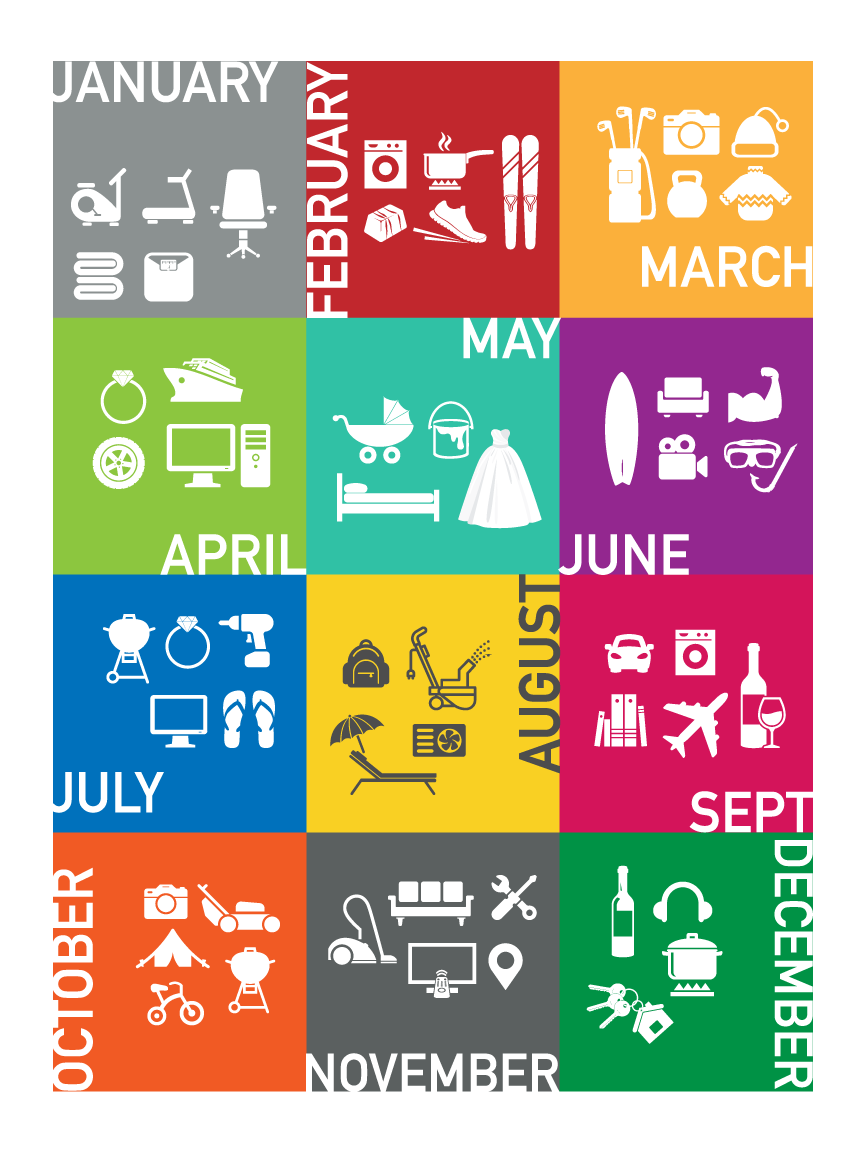
Many purchases, however – big and little – can wait until the time is optimal for getting the very best deals. So if you’re thinking of upgrading an item you currently own or adding something new to your inventory, mark your calendar now and then watch for deals from national and local retailers. Here are tips from consumer experts on the best months to target for shopping for specific items.
January
Fitness is a key component for this post-holiday period with elliptical bikes, treadmills and bathroom scales on sale. For tucking in comfortably on cold winter nights, bed linens are on sale, as are towels. New model office furniture debuts next month, so retailers put existing inventory on sale.
February
If high-end chocolates appeal to you, shop the sales immediately after Valentine’s Day, as you won’t find these premium products on sale often. Mattress sales are huge for Presidents’ Day in mid-month, and winter sports gear and coats are on season-end sales, even though winter will linger awhile. February is also a good time to shop for major appliances, housewares and cookware. To get a jump start on spring, look for bargains on running shoes.
March
This change-of-season month is a good time to shop for luggage, in preparation for spring and summer travel. You can find great deals on winter sports equipment and all winter clothing and cold-weather accessories. Digital cameras and humidifiers also go on sale in March. If you missed the January deals on fitness equipment, this is another good time to look for treadmills, ellipticals and small workout-at-home items like weights and fitness mats. March is frozen food month, so think about stocking your freezer with frozen veggies, fruits and prepared meals. Try out a new set of golf clubs on sale as spring begins.
April
New carpeting is a popular upgrade after winter and as spring sets in, deals abound. Desktop and laptop computer also go on sale and you can find great offers on jewelry. As thoughts turn to vacation time, cruise lines offer special rates through the entire season if you book now. Car auctions for dealers are plentiful in spring and they’re trying to move used cars quickly, so this is a good time to upgrade your ride. It’s also a good time to improve your old ride with new tires.
May
If a wedding is on the horizon, bridal gowns are on sale in May. Baby necessities like high chairs and strollers are on clearance, so plan ahead if a new arrival is expected in your family. You can find good buys on desktop and laptop computers and mattresses, if you missed February’s sales. If your home needs a bright new look, interior and exterior paints go on sale in May, as do wood stains.
June
As the 2018 hurricane season starts, you can get great rates on Caribbean cruises starting now. If a northern route is more appealing, it’s off season for Alaskan cruises, so you can find good packages for remaining sailings for 2018. To record your upcoming summer adventures, camcorders are on sale in June. Indoor furniture is on close-out prices, as much of the focus is now on outdoor living. To add to your outdoor fun, summer sports gear is on the seasonal promotion tables. With the focus on outdoor recreation, gym memberships are attractively priced in June.
July
Tools, barbecue grills and decking are big clearance items in July, as the outdoor season remains the main retail focus. As thoughts start to turn to back-to-school time, however, summer clothes end up on the sales racks and you can find good buys on computers. With no major gift season coming up, jewelry retailers are looking for customers and offer enticing specials.
August
The retail focus this month is on the end of summer and start of the school year. Look for bargains on air conditioners, outdoor furniture and dehumidifiers. Backpacks, school supplies and kids’ clothing are on sale, as retailers compete for traffic in stores and clicks online. As you shop for back-to-school season, watch for tax-free shopping days in your area on many essential items. If you like to plan way ahead, look for pre-season offers on snow blowers.
September
New cars debut in late September and October, so dealers need to clear their lots of the remaining 2018 inventory. This is also a good time to shop for major appliances and office supplies. If travel is on your holiday agenda, book now for the best rates on airfares, hotels and car rentals. In advance of the holiday entertaining season, look for sales on wine.
October
Summer is now truly history, so remaining bikes, barbecue grills, lawn mowers, tractors and camping gear are on clearance sales. If you’re looking for big-ticket items for holiday gifts, check out the offers on digital cameras and desktop computers.
November
For great buys on TVs, November is a good time to hunt. Electronics on sale this month include camcorders and GPS systems. If you want to spruce up your home for holiday entertaining, furniture is on sale in November, as are vacuum cleaners and tool kits. For the gamers on your shopping list, video games are on close-out special. And of course, check out the Black Friday offers, if you can deal with the strange shopping hours and the crowds; and Cyber Monday offers, for click-and-buy convenience.
December
Not surprising, December is a good time to buy just about anything, as the make-or-break retail season rushes toward its conclusion. If your budget allows, put some cash aside for shopping for yourself, in addition to the family and friends on your holiday shopping list. Numerous items on sale now include camcorders, e-book readers, gas grills, GPS systems, headphones, kitchen cookware, major appliances, TVs and of course, toys. December is also a good time to shop for a new house, as the market is slow and sellers may be willing to lower their asking price considerably if they really need to move on. For New Year’s parties and stocking up for the coming months, champagne and other bubbly wines are on sale. Cheers to smart shopping in 2018!
The best shopping advice for year-round, of course, is to avoid an impulse purchase of any high-ticket item. Do your research, know the typical price, comparison shop, and if you can, wait for a great deal and then act before you miss it. Afterwards, feel satisfied that you’re a savvy shopper.